
That thin line of sealant between the edge of your pool and the surrounding deck might not seem like a big deal, but it’s one of the most important components for protecting your pool structure.
This flexible sealant, known as mastic, serves as a critical expansion joint. When it fails, it can lead to expensive and irreversible damage to your pool and deck.
Pool mastic allows for the natural movement of the concrete, which expands and contracts with changes in temperature and ground shifts.
Text or call Atlas Pools for a free mastic repair quote.
Competitive pricing starting at $650. 817-781-2202
Ignoring a cracked mastic seal can cause many issues:
- Freeze damage: In colder climates, water trapped in the expansion joint can freeze and expand. This is a common cause of severe damage to tiles, coping, and the pool shell.
- Soil erosion: The most immediate danger is water seeping through the gap. This water can erode the soil beneath your deck, leading to sinking, shifting, or “heaving” of the concrete slabs.
- Deck and coping damage: With no room for expansion, the concrete deck can push against the pool’s coping, causing it to crack, dislodge, or loosen. The stress can also cause unsightly and dangerous cracks to form in the decking itself.
- Tile damage: The expansion and contraction can cause the waterline tiles to crack or fall off the pool’s interior surface.
- Foundation and structural risks: Over time, consistent water seepage can compromise the structural integrity of your pool’s gunite beam, leading to much more extensive—and expensive—repairs.
Ask Atlas Pools for a free mastic repair quote if you see the following:
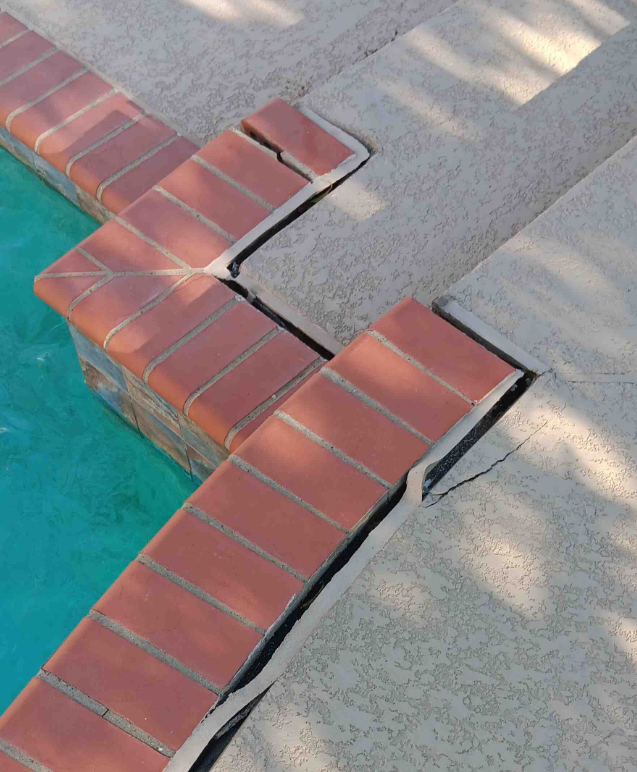
- Visible cracks or peeling: The sealant should be smooth and fully adhered to both the deck and coping.
- Separation: A noticeable gap between the deck and coping is a clear sign of failure.
- Loose coping stones or tiles: If tiles are falling off or coping is wiggling, the mastic may be failing to absorb movement.
- Sinking or uneven deck: An uneven or raised deck is a sign of underlying soil erosion.
DIY or hire Atlas Pools to repair your mastic cracks?
While it is a possible DIY project, it can be a challenging process to get right. For most homeowners, especially if the damage is extensive.
Here is a general overview of the process:
- Remove the old mastic with a utility knife and scraper.
- Clean the joint thoroughly with a shop-vac and cleaner.
- Install backer rod or sand into the gap to provide a stable base for the new sealant.
- Apply the new mastic approved for pool use.
- Finish the surface by smoothing it out and adding a textured sand finish.
- Clean the deck, avoiding getting sand in the pool.
Don’t wait until you see large cracks and dislodged tiles. A little proactive maintenance on your pool mastic can save you from a lot of heartache and a much larger repair bill down the road.

What Is The Purpose of Swimming Pool Mastic?


Comments are closed